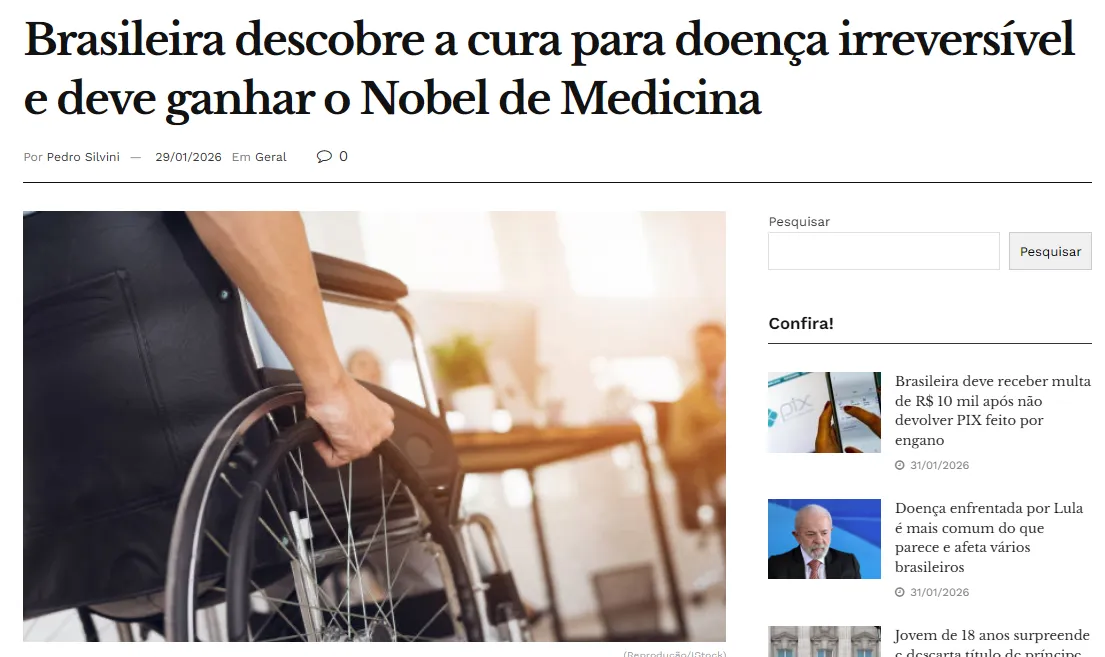
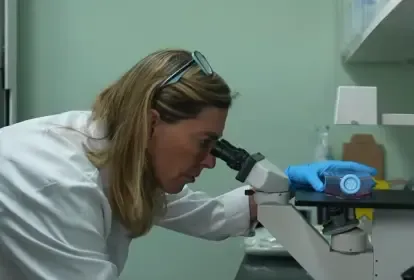
Tatiana Coelho de Sampaio é uma cientista brasileira que criou uma tecnologia chamada polilaminina para ajudar na recuperação da medula espinhal.

A Brazilian Discovery That Helped People Walk Again
Tatiana Coelho de Sampaio is a Brazilian scientist and professor at UFRJ.
She started this research in 1999, in Rio de Janeiro.
She studied laminin, a natural protein in the human body.
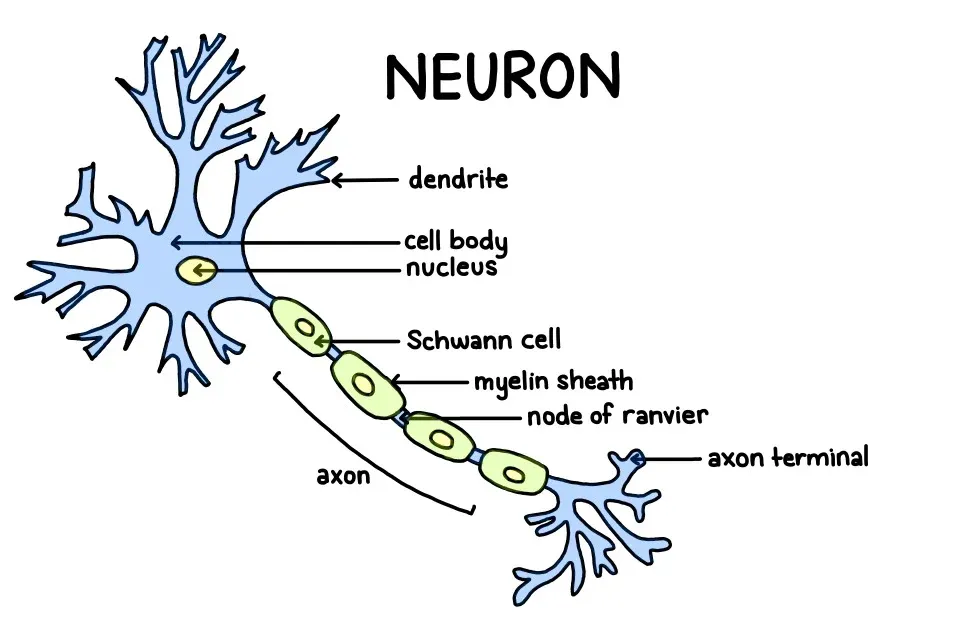
Laminin helps nerves grow and connect.
Tatiana discovered a new way to organize laminin in the lab.
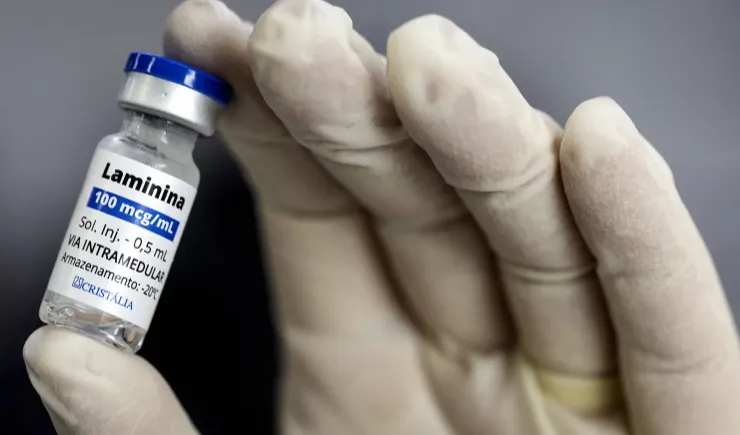
This new technology is called polylaminin.
Polylaminin is made from proteins taken from placentas.
The goal is to help the spinal cord heal after an injury.
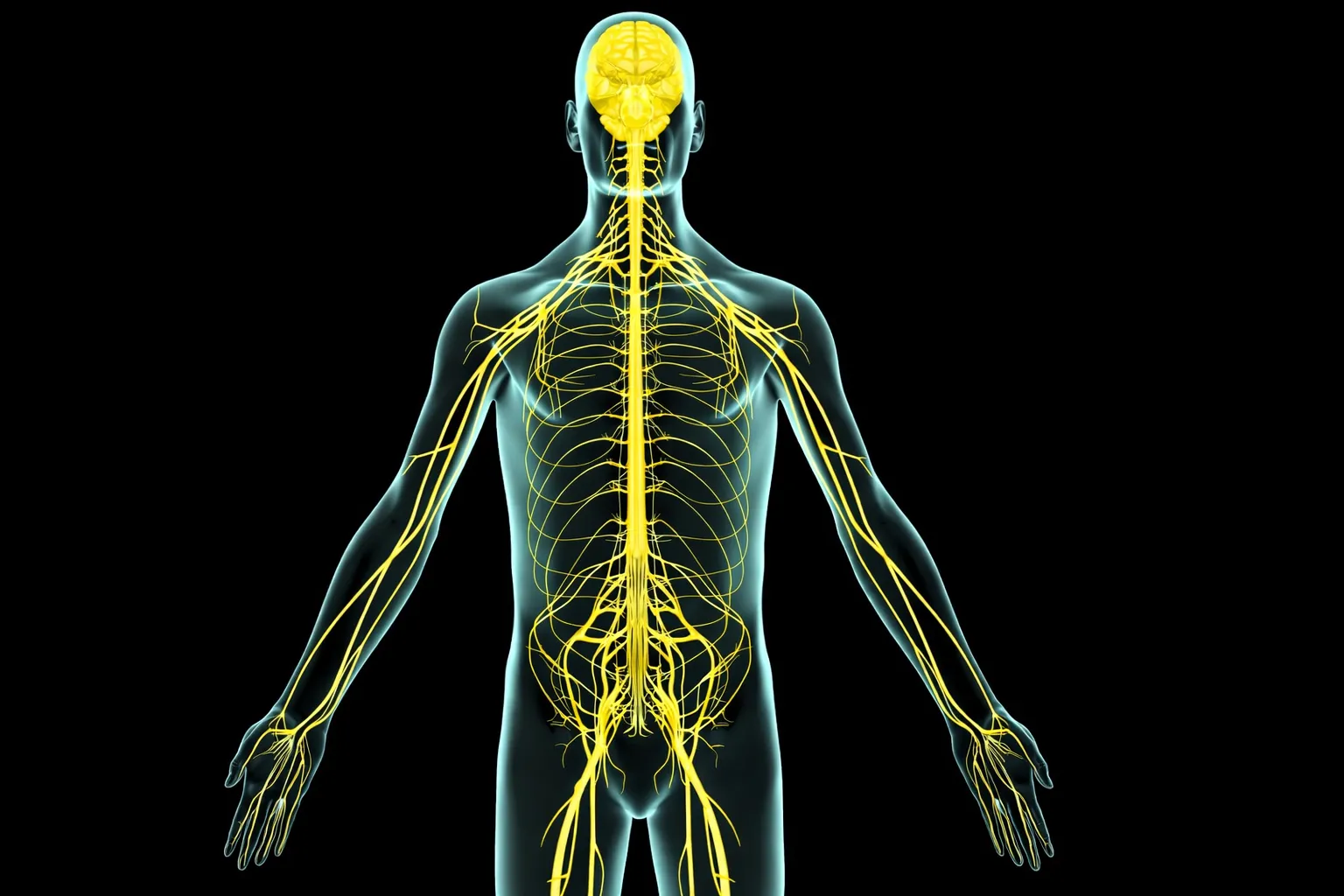
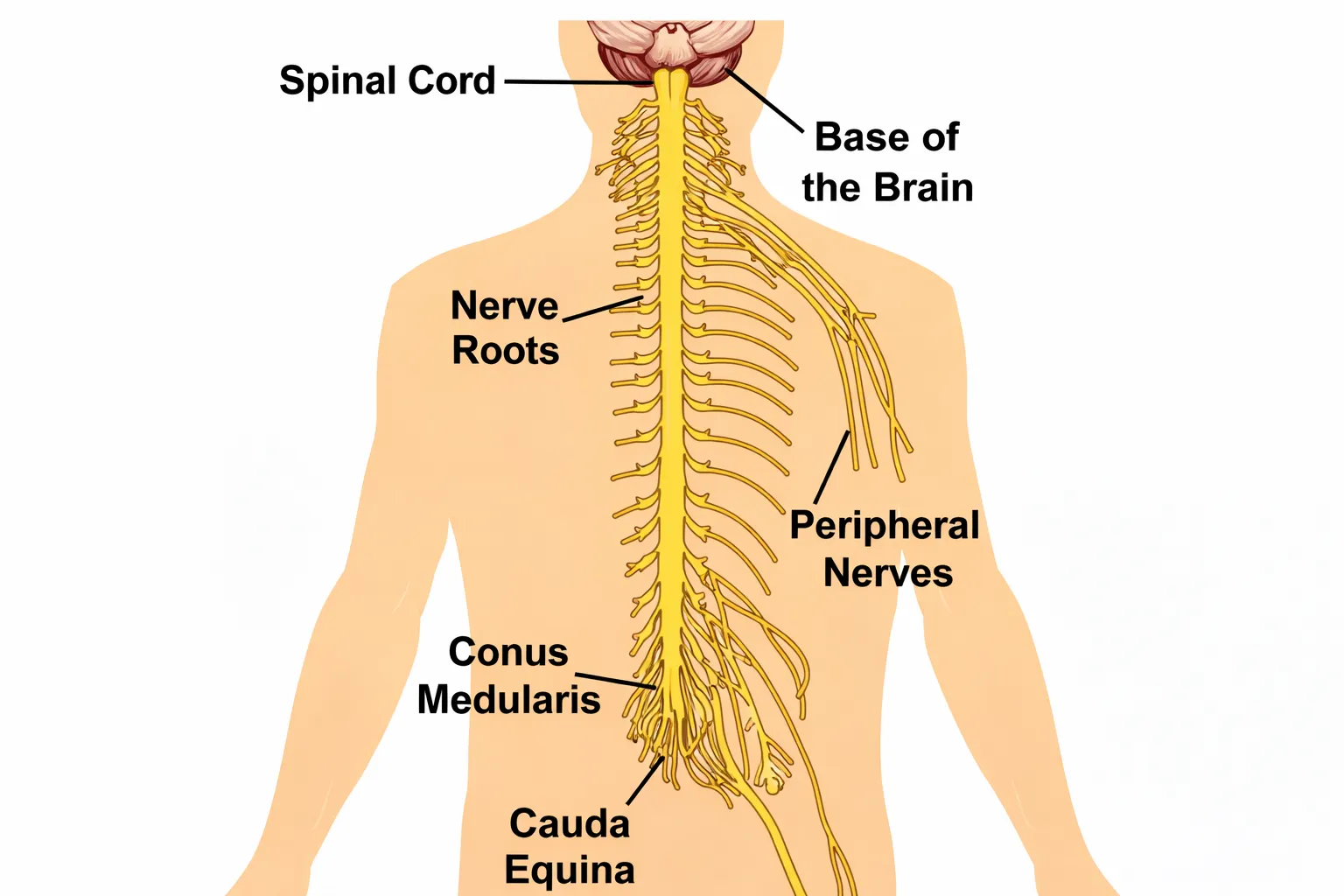
The spinal cord connects the brain to the body.
When it is injured, people may not walk or move again.
Polylaminin helps nerve cells grow and reconnect.
It may rebuild broken connections inside the spinal cord.
After many years of work, the research moved from animals to early human studies.
In some reported cases, people with paralysis started to move again.
Some could move a toe or feel their legs.
This gave real hope to patients and families.
Her work is a big scientific advancement in Brazil.
More clinical studies are still needed, but the impact is very strong.
Brazilian people expect her to win the Nobel Prize of Medicine.
Advanced level
Rio de Janeiro. For more than two decades, a research program led by UFRJ professor Tatiana Coelho de Sampaio has been pushing against one of the hardest limits in medicine: the repair of the injured spinal cord.
Her work began in 1999 with the study of laminin, a natural protein essential for nerve growth, guidance, and connectivity within the human nervous system. Over the years, Coelho de Sampaio developed a new way to organize laminin in the laboratory, creating a polymerized structure known as polylaminin.
The technology, produced from proteins extracted from placental tissue, is designed to form a regenerative scaffold capable of supporting nerve cell survival, stimulating axonal growth, and promoting reconnection of disrupted neural pathways. In spinal cord trauma, where broken connections between brain and body often result in permanent paralysis, this approach represents a new therapeutic direction aimed at structural repair rather than compensation.
After extensive preclinical testing in animal models, the project advanced into early human investigations. Initial reports linked to the program have described encouraging neurological changes in patients with severe paralysis, including the return of partial movements and sensation, outcomes historically considered extremely rare in this clinical context.
Supporters of the research argue that polylaminin has opened a credible scientific path toward functional recovery after spinal cord injury, placing Brazilian neuroscience at the center of an international frontier in regenerative medicine. While larger controlled trials remain necessary to establish efficacy and reproducibility, the discovery is already viewed by many as one of the most significant biomedical breakthroughs developed in Brazil.
For many Brazilians, Tatiana Coelho de Sampaio’s achievement is not only a scientific milestone but the kind of transformative medical innovation that deserves the highest recognition in global science, including serious consideration for the Nobel Prize.